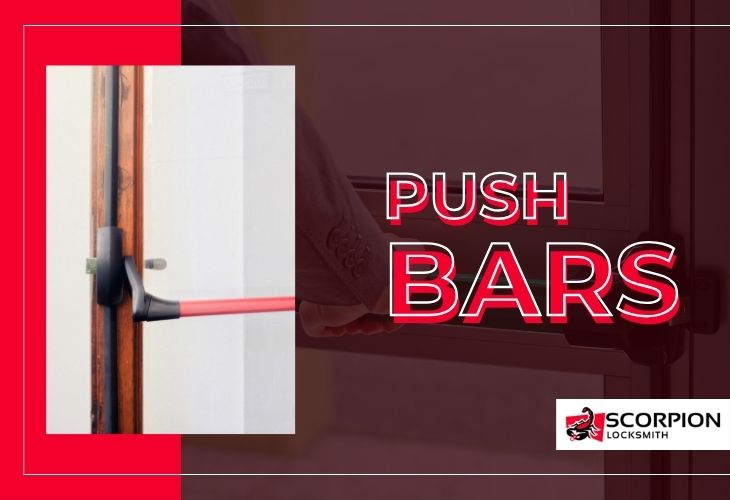
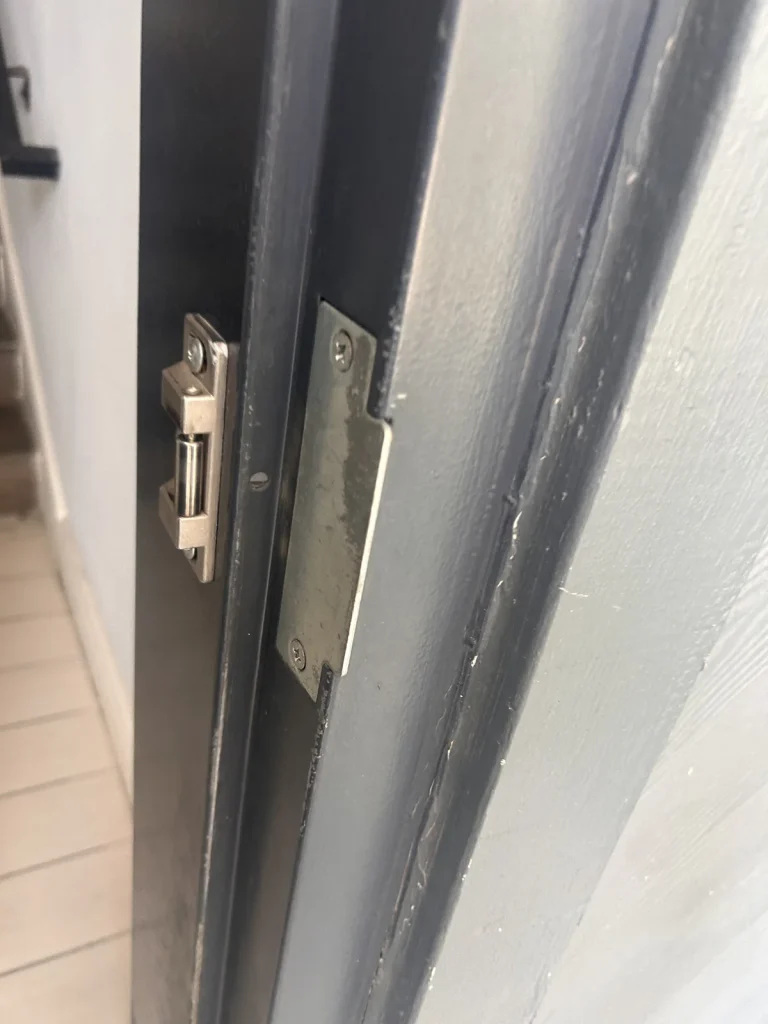
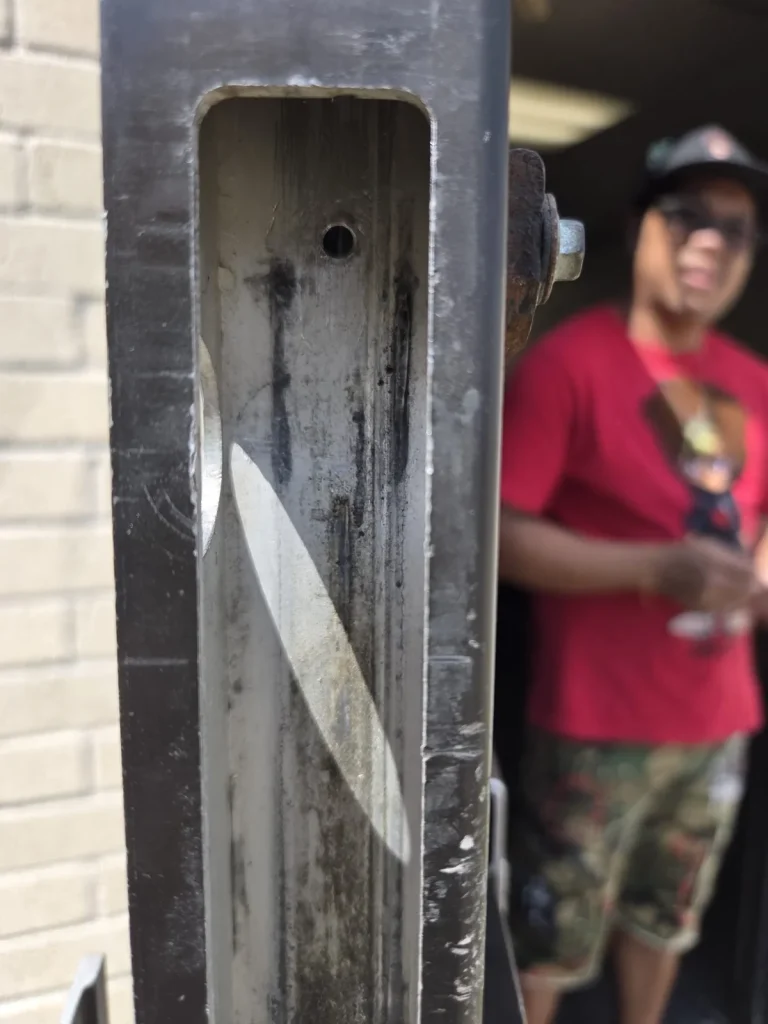
Door Construction and Mounting Choices
A narrow aluminum storefront door may need different hardware from a wide steel service door. Glass placement, existing holes, and frame space can limit mounting choices.
Before an Installation, We Review
- Door material and usable mounting space.
- Single-door or paired-door configuration.
- Existing lock preparation and frame condition.
- Inside release and outside entry needs.
- Door closer and latch compatibility.
- Fire labels and relevant hardware instructions.
We do not treat every horizontal bar as an acceptable substitute. A device must work with the whole opening, not simply cover the old screw holes.
If you are changing how a space is used, mention that early. A change in occupancy or door function may require additional review before hardware selection and installation.
Replacement Makes Sense When Hardware Is Worn or Unsuitable
Push bar replacement is often appropriate when damage, recurring faults, or compatibility problems limit a repair. It can also be needed when an existing device does not support the door’s required function.
An older bar may have worn latch components or missing pieces. Previous modifications can also leave the device poorly supported or difficult to service.
Replacement involves more than choosing a similar length. Mounting patterns, strikes, trim connections, and door preparation all matter.
We check whether existing preparation can support the proposed device. Unused holes, damaged mounting areas, and changes to a rated door need careful review.
Have you already purchased a replacement bar? Share its model information before the visit so compatibility can be assessed before installation begins.
Different Exit Devices Serve Different Openings
Exit device types differ mainly in where and how they latch. Knowing the general type helps us understand your door before arriving.
How Exit Devices Latch
Common configurations include the following device types.
Common Configurations
- Rim exit devices. A latch at the door edge engages a strike on the frame or a suitable mullion.
- Surface vertical rod devices. Visible rods connect the bar to latching points at the top and bottom.
- Concealed vertical rod devices. Rods run inside the door rather than along its surface.
- Mortise exit devices. The bar operates a lock body fitted into the door edge.
Paired doors can require special attention because both leaves must work together. A mullion, coordinator, or meeting-edge hardware may affect operation.
Photos can help identify the general configuration. A final recommendation still requires checking the opening and the device’s specific instructions.
Fire-Rated Doors Need Compatible Exit Hardware
Fire-rated doors require hardware and modifications that preserve the approved assembly. Fire exit hardware has requirements that differ from ordinary panic hardware.
We look for door and frame labels and check device information when reviewing a rated opening. A label alone does not confirm that every existing component or past modification is acceptable.
Some panic devices allow mechanical dogging, which holds the latch retracted. That feature is generally not permitted on fire exit hardware because the door must latch when it closes.
Do not wedge a fire door open or disable its latch. Approved hold-open arrangements, where permitted, involve more than keeping a bar pressed down.
Whether a specific opening requires panic hardware depends on its use and applicable rules. Scorpion Locksmith can review hardware conditions, while final approval rests with the authority responsible for that opening.