
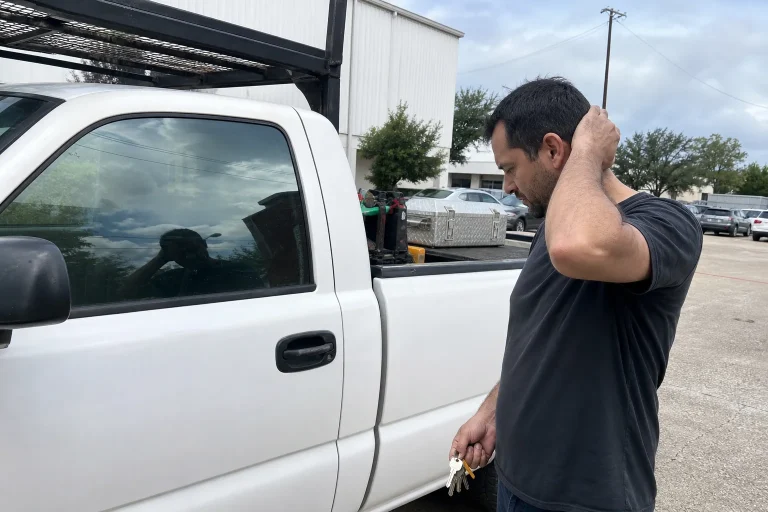
Automotive Locksmith
Work Truck Lockout or Lost Key? What Contractors Should Plan For
Locked out of a work truck or missing its key? Gather the truck details, proof of authority, location, and safety concerns before calling for help.
License Number: B09416401
Need Crash Bar Installation In Houston Scorpion Locksmith installs UL listed panic bars same day. Code compliant ADA hardware licensed insured 24 7 free quote
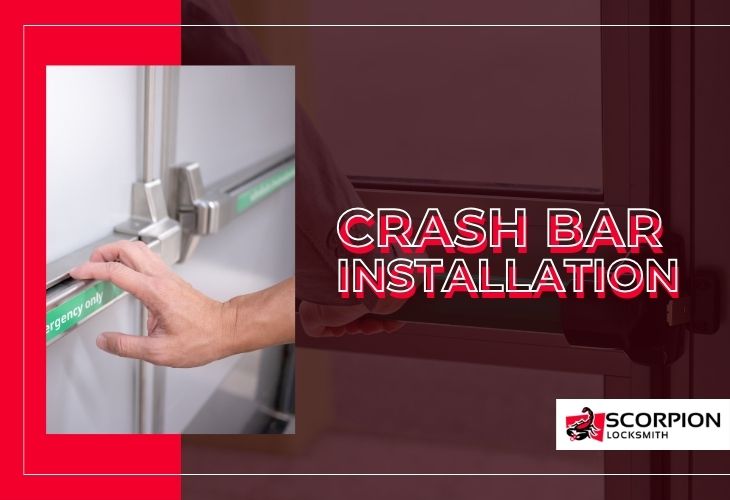
Crash Bar Installation in Houston adds push-operated exit hardware so people can open a door from inside without turning a knob. Scorpion Locksmith helps Houston, TX, businesses select compatible hardware, fit it to the opening, and check door operation, with attention to safe exit access and outside security.
A dependable exit starts with the whole opening, not just the bar attached to it. The door, frame, hinges, closer, and strike must work together for smooth operation.
Is your exit difficult to push open, slow to close, or secured with hardware that confuses visitors? We can review the opening and discuss a practical exit hardware installation plan. Call (281) 623-1517 to speak with Scorpion Locksmith.
Crash bar installation fits a door with a horizontal push device that releases its latch from the exit side. Often called a panic bar or push bar, this hardware helps people leave without searching for a small handle.
The work includes checking the door, selecting compatible components, mounting the device, and adjusting its connection with the frame. Outside trim can also control entry without interfering with the intended exit function.
Not every push bar is panic hardware, and not every commercial door needs the same device. Building use, occupant load, door construction, and applicable requirements affect the selection.
We look at how your opening functions during normal business hours and after closing. That helps prevent a common mismatch, hardware that fits the door but does not fit how people use it.
A door needs attention when people must struggle, repeat a push, or use an unexpected step to exit. Visible damage is another reason to have the opening checked before it becomes harder to operate.

Does someone have to pull the door inward before pushing it out? That often points to pressure or alignment trouble, not simply a worn bar.
A new device may help, but the cause should be checked first. Replacing hardware without correcting a sagging door can leave the same problem in place.
The right exit device depends on the door configuration, frame, and intended use. A single solid door may need a different setup from a narrow-frame glass entrance or a pair of commercial doors.
Each option has fit and installation limits. Door thickness, available mounting space, existing holes, and frame condition can rule out an otherwise useful choice.
We also consider outside access. A keyed lever, pull handle, or other compatible trim should support your entry plan without creating an obstacle to exiting.
Fire exit hardware serves a different application from ordinary panic hardware. A fire-rated opening needs compatible components that preserve its required closing and latching functions.
A bar that looks correct may still be wrong for that opening. Before drilling or replacing components, the door’s identification and existing hardware should be reviewed.
Mechanical dogging holds a latch retracted on some panic devices. That function is generally not permitted on fire exit hardware, so staff should not assume every device can remain unlatched during business hours.
Avoid taping a latch back or wedging a fire door open. These shortcuts can interfere with the opening’s intended operation.
Where the opening’s status or permitted hardware is unclear, property records or the appropriate building official may be needed. We keep those questions separate from simple appearance or convenience preferences.
Scorpion Locksmith plans the installation around the condition and purpose of your door. A clear review helps identify fit problems before new mounting holes are made.
The goal is a usable opening, not merely a newly attached bar. If the frame or door needs other work, we explain that before treating the device as the entire solution.
A crash bar works best when the door hangs squarely and moves without rubbing. Loose hinges, damaged frames, or worn pivots can prevent correct latch contact even when the device itself is new.
Glass storefront doors often have limited mounting space. Hollow metal and wood doors have different fastening needs, and thin door skins may need suitable internal support.
A stronger push is not a proper fix for poor alignment. Neither is tightening the closer until the door slams hard enough to latch.
If structural damage falls outside the hardware work, another trade may need to correct it. Addressing that issue first can prevent repeated operating trouble.
Exit hardware can permit people to leave while restricting entry from outside. The correct combination of device and exterior trim supports both functions without asking occupants to find a key to exit.
Tell us who uses the door and when. A staff entrance may need keyed outside access, while a public entrance may need a different daily operating arrangement.
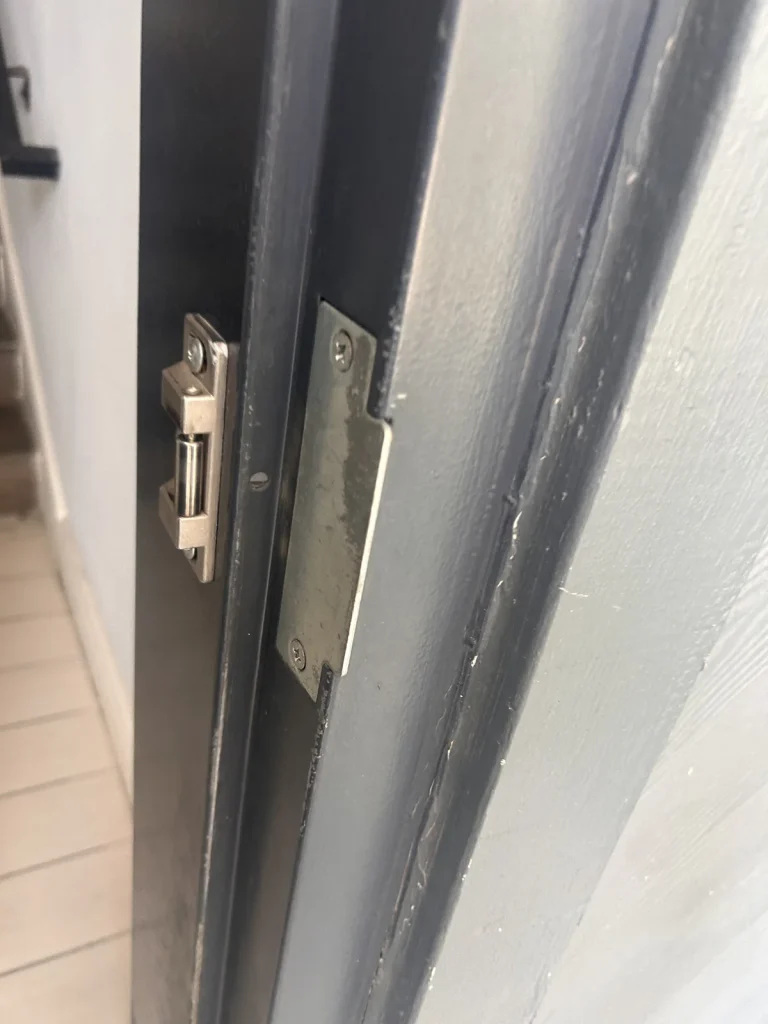
For Crash Bar Installation in Houston, we also ask about existing access control. Electric strikes, electrified trim, alarms, and other components must be compatible with the opening and permitted exit arrangement.
Electrical connections or specialized system work may require coordination with another provider. We clarify that scope rather than assuming every existing component will work with a replacement bar.
Avoid adding slide bolts, padlocks, or other improvised restraints to an occupied exit. Added security should not create an unexpected barrier for people trying to leave. OSHA exit route guidance provides additional safety context.
An accessible exit depends on the entire path through the doorway. A push bar alone does not resolve a heavy door, limited clearance, a difficult threshold, or poorly placed hardware.
We consider whether users can reach and operate the device comfortably. Door closer resistance and latch pressure also deserve attention.
We do not treat one hardware change as proof that the whole building meets every requirement. Where project approval or an accessibility review is needed, coordinate with the responsible professional or authority.
Can a visitor recognize how to leave without asking your staff? Simple, consistent operation helps make the doorway easier to use.
Houston heat, humidity, rain, and building pressure can expose weaknesses in an exit door. These conditions can contribute to corrosion, changing door gaps, or extra pressure against the latch.
An exterior metal door may operate differently during a hot afternoon than early in the morning. Weather seals that press too tightly can also make releasing the latch harder.
Air conditioning and pressure differences can affect closing speed and opening resistance. A closer adjustment should account for those conditions rather than simply making the door shut harder.
For businesses across Houston, Texas, we recommend reporting when the problem happens when discussing hardware repair. “It sticks every afternoon” gives us more useful information than “it sticks sometimes.”
Take note of rain exposure, nearby deliveries, and repeated cart impacts too. A push bar is exit hardware, not a bumper for every box entering the building.
Installation timing depends on hardware compatibility and the condition of the existing door. A straightforward replacement usually involves fewer steps than converting an opening to a different device type.
Photos can help with early planning, but they do not replace an on-site inspection. Some fastening and alignment issues become clear only when the existing hardware is removed.
We discuss the expected scope after reviewing the opening. If your business has delivery windows, class schedules, or busy entry periods, share them before the work is arranged.
Preparing the opening helps us inspect the door and discuss the right hardware for crash bar installation. You do not need to remove the existing bar or take the lock apart.
If the property is leased, check who manages door hardware decisions. The owner, property manager, or tenant may have different responsibilities.
Let us know if the door serves an occupied area’s exit route. Work planning should preserve appropriate access rather than treating a required exit as a convenient storage spot.
A door that will not release properly needs prompt attention. Do not rely on repeated force, a taped latch, or a staff member standing nearby to help people out.
If an exit becomes unusable, notify the person responsible for the building immediately. Follow the site’s safety procedures and seek appropriate direction about continued occupancy.
During an emergency, follow evacuation procedures and contact emergency services. A hardware appointment is not a substitute for an immediate emergency response.
For a damaged but nonemergency opening, keep people away from sharp or loose components. Contact Scorpion Locksmith to discuss the next step for damaged hardware.
A completed exit device installation should be tested through repeated opening and closing cycles. One successful push is not enough to confirm consistent operation.
We check that the latch retracts fully and the device returns after release. We also watch the door close and confirm that it engages the strike without manual assistance.
Your staff should understand any permitted key functions and daily operating settings. We explain what to watch for so a change in door behavior gets reported early.
Routine care starts with keeping the door clean, clear, and unmodified. Dust, loose screws, and repeated impacts can affect operation over time.
Wipe exposed surfaces with products appropriate for the hardware finish. Do not spray oil into the mechanism unless the manufacturer’s instructions call for it.
Do not wait until several employees have developed their own trick for opening the door. Exit hardware should work predictably, without a secret handshake. Discuss recurring problems as part of commercial hardware repair.
Scorpion Locksmith helps Houston businesses plan exit hardware work around the actual door and its daily use. We focus on compatible components, clear scope, and practical operating checks.
Whether you are replacing a damaged panic bar or changing an existing opening, begin with a review of the door. Tell us about outside access needs, closing problems, and any connected security equipment.
For Crash Bar Installation in Houston, call (281) 623-1517 or visit our contact page. Share your location, door type, and current concern so we can discuss the next step.
A crash bar, also known as a panic bar, is a door device that allows quick and easy exit in emergencies.
Crash bars improve safety by allowing people to exit quickly during emergencies, and they are often required by building codes.
Professional locksmiths, like Scorpion Locksmith, have the experience to install crash bars correctly.
Crash bars can be fitted on most commercial exit doors, such as in offices, schools, and retail spaces.
Installation time varies, but most jobs can be completed within a few hours.
Scorpion Locksmith works carefully to minimize any impact on your door during installation.
Yes, crash bars are designed for easy exit from inside; outside access usually requires a separate handle or key.
Yes, Scorpion Locksmith can replace old or broken crash bars with new, reliable ones.
Periodic checks are recommended to ensure the crash bar continues to work properly.
Simply contact Scorpion Locksmith by phone or through their website to set up an appointment.
Locked out of a work truck or missing its key? Gather the truck details, proof of authority, location, and safety concerns before calling for help.
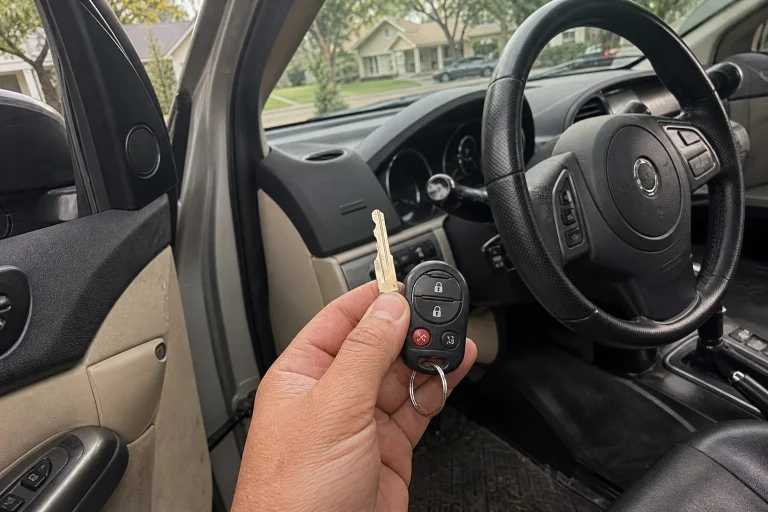
If you have one working car key, making a spare now can help you avoid a last-key emergency and give you time to check that every function works.
If your key goes in but the ignition won’t turn, check steering wheel tension, shifter position, and a spare key before you force anything. Repeated binding may point to a worn key or ignition hardware that needs inspection.