Intro
If your door will not latch, the cause is usually hinge sag, a misaligned strike plate, or worn parts. Start with simple checks. Tighten loose screws. Test the door while lifting on the handle. Mark the strike to see where the latch hits. Adjust hinges or move the strike a little. If the latch or deadlatch is worn, swap the hardware.
Why doors stop latching and how to spot it
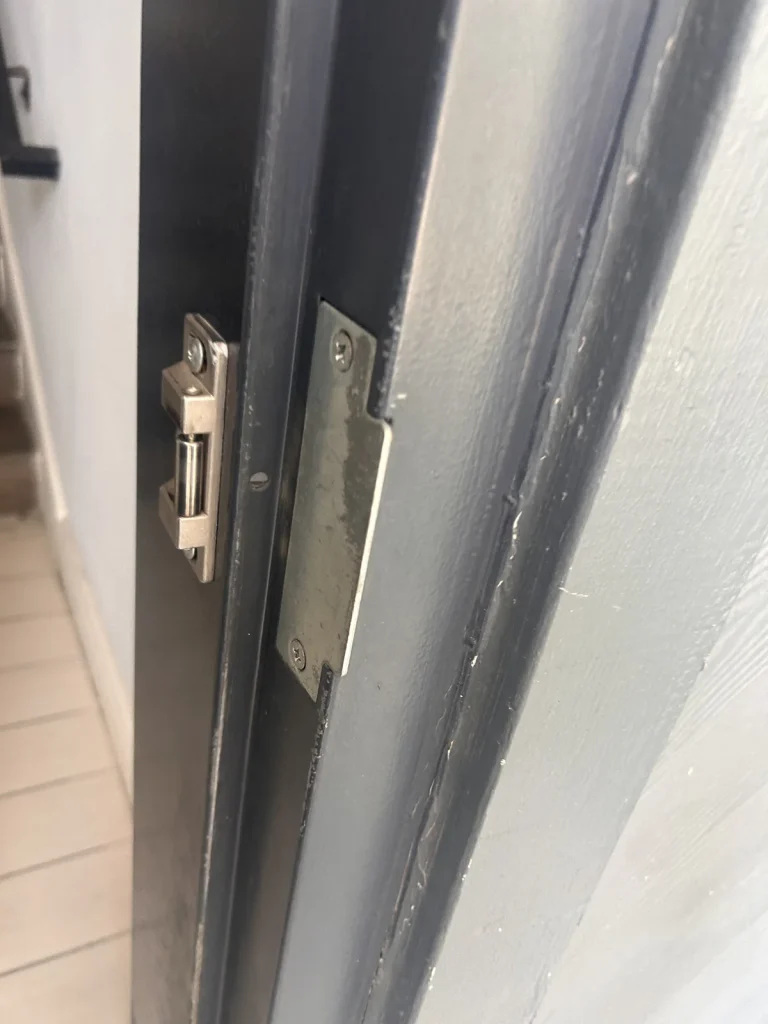
When a door does not catch, it feels like the house is arguing with you. The good news, this is fixable. Doors have three main players. Hinges hold the door. The latch slides into the strike plate. The strike plate is the metal part on the frame with the hole. If any of these are off by a hair, the latch pin misses the hole, and you get a bounce back.
You ask, why now? I say, gravity never sleeps, wood swells in Houston humidity, screws loosen over time, and family members love to hang on door handles. Each little thing adds up.

A quick Saturday story from The Heights
We met a homeowner off 19th Street in The Heights. He said, My door shut fine last month. Now it will not latch unless I hip check it. We took a peek. The top hinge screws were loose. The door sagged, maybe 1 eighth of an inch. A few long screws into the framing, a tiny shim, and a small nudge of the strike plate, and boom, click. No more hip checks.
Tools that help
- Phillips screwdriver and flat screwdriver
- A handful of 3 inch wood screws
- Utility knife, small chisel, or sharp wood bit
- Thin cardboard or plastic shim, even a business card works
- Pencil, a bit of masking tape, or lipstick to mark the latch
- Drill with small bit if you must move the strike plate
- Wood glue and toothpicks for stripped holes
- Light lock lube that is safe for locks
Common causes, signs, and the fix
1) Hinge sag
- Signs: The gap at the top of the door is tight on the latch side and big on the hinge side. The latch hits low on the strike plate. You can lift the door with the handle and it latches for a second.
- Fix: Tighten hinge screws. Replace short hinge screws with 3 inch screws into the wall stud. If the door still sits low at the latch, add a thin shim behind the bottom hinge or remove a hair of wood under the top hinge leaf so the door moves up. Do not overdo it. A little goes a long way.
2) Strike misalignment
- Signs: The latch rubs high or low. Paint is scuffed around the strike. You see a shiny mark on the strike lip. The door closes, then springs back.
- Fix: Mark where the latch hits. A dab of lipstick on the latch face shows contact. Close the door, open, then check the mark on the strike. Move the strike up or down a bit, or file the hole a tiny amount. If you move the plate, fill old screw holes with glue and toothpicks, then drill pilot holes for new screws.
3) Hardware wear
- Signs: The latch feels gritty, sticks, or does not spring back. The little deadlatch pin on the latch face gets stuck. The latch bevel faces the wrong way.
- Fix: Check that the bevel faces the strike plate. If not, flip the latch. If the spring is weak or the deadlatch pin sticks, replace the latch set. Use lock-safe lube, not cooking oil. If the knob or lever has play, tighten the through screws.
Houston weather tie-ins
Houston heat and humidity are like a wet towel on your door. Wood swells when it is damp, then shrinks when the AC runs full blast. Summer storms along I-10 can swell an exterior door by several millimeters. That tiny change is enough for a miss. Metal doors expand in heat too, though not as much. Frames can shift with moisture. Keep that in mind when you plan small tweaks. Leave a little room for seasons.
What we usually see in Houston, TX
- Humid days make wood doors swell on the latch edge.
- Top hinge screws loosen in older homes in Montrose and the Heights.
- Weatherstrip gets crushed on Westheimer-area condos, which can push the door back open.
- Patio doors near the Gulf breezes get grit in the latch, which makes them sticky.
Quick check, then fix
You do not need fancy tools. You need a clear plan. Use the steps below and you can find the cause fast.
- Open and close the door slowly. Watch the gap along the top and latch side. You want an even gap, like a pencil thickness.
- Lift the handle up a tad while closing. If it clicks, the door is sagging.
- Mark the latch face with lipstick or a dry erase marker. Close the door and open it. See the mark on the strike. High mark means the latch is hitting high. Low mark means it hits low.
- Press the latch with your thumb. It should spring out fast. If it is lazy, clean and lube, or replace.
- Check hinge screws. Loose or stripped screws are common. Do not be shy about adding 3 inch screws through the top hinge into the framing stud.
- Look at the strike plate. Is the hole too tight, too low, too high, or too far in? Adjust by moving the plate or shaving the mortise.
Troubleshooting steps that guide you
- If the door latches when you lift the handle slightly, then tighten hinge screws and add 3 inch screws to the top hinge.
- If the latch hits low on the strike, then raise the door by shimming the bottom hinge or lowering the top hinge leaf into the mortise.
- If the latch hits high, then do the reverse. Shim the top hinge or deepen the bottom hinge mortise.
- If the latch hits toward the outside edge of the strike plate, then move the strike plate inward a hair or bend the strike lip in.
- If the latch hits toward the inside edge, then move the strike outward or bend the lip out.
- If the latch face shows deep scratches, then file burrs off the strike plate and polish the latch face lightly.
- If the deadlatch pin is trapped by the strike, then enlarge the strike opening so the small pin rests on the strike face, not inside the hole.
- If screw holes are stripped, then pack them with toothpicks and wood glue, let dry, and reinstall screws.
- If weatherstrip pushes the door back open, then adjust or replace the weatherstrip so it compresses but does not fight the latch.
- If the latch sticks, then clean out dust, use lock-safe lube, and test. If still sticky, replace the latch set.
- If the door rubs the floor at the latch side, then trim the door bottom slightly or adjust hinges to lift the slab.
- If the frame is loose, then add long screws through the strike plate into the framing stud to pull it tight.
Hinges, the quiet heroes
Hinges carry all the load. Over time, top hinge screws can back out, which lets the door tilt. Here is the fix that works in many Houston homes. Remove one short screw from the top hinge on the frame side. Replace it with a 3 inch screw. Drive it into the stud, not just the trim. Do this on the middle hinge too if needed. The door will pull back into place. If the reveal still looks off, use a thin cardboard shim behind the correct hinge leaf. Start thin, test, then adjust.
Strike plates that hit the mark
The strike plate hole must line up with the latch. Move the plate only as much as needed. Here is a simple method. Color the latch with marker. Close the door and press, then open. Check the mark on the strike. If the mark is high, move the plate up a bit. If low, move it down. If the plate needs to shift left or right, adjust the mortise. Fill old holes with glue and wood slivers so the new screws bite hard. For tiny tweaks, bending the strike lip by one or two degrees can do the trick. Use pliers, pad the lip with cardboard so you do not scratch it.
Latch and deadlatch basics
The latch is the angled part that clicks into the strike. The deadlatch is the small pin next to it. That small pin should rest on the strike face when the door is closed. If the small pin falls into the hole, the lock can be bypassed more easily. So keep the strike opening sized so the big latch goes in, and the small pin rides on the plate. Also check that the bevel of the latch faces the strike plate. If it faces backward, the latch will hit hard and bounce.
Interior vs exterior doors
Interior doors often use lighter latches and basic strikes. Exterior doors have stronger latches and wider strikes. Exterior frames also have weatherstrip that adds pressure. If an interior door will not latch, it is often a hinge sag or a tiny strike shift. If an exterior door will not latch, you might need both hinge and strike tweaks because of weatherstrip and door sweep pressure.
Weather and building movement
Homes near Buffalo Bayou and along Beltway 8 can settle a bit. Frames twist a hair. You might fix a latch in spring, then get a small miss in August when humidity peaks. That is normal. Leave a little extra clearance so the latch can still enter the strike hole when wood swells. A 1 millimeter file on the strike can save you a repeat job later.
Short safety notes
- Keep fingers clear when closing and testing.
- Wear eye protection when drilling or chiseling.
- Do not over-tighten screws in old wood. Pre-drill to avoid splits.
- If your door has glass, do not slam or lean on it.
- If the lock has smart parts, remove batteries before you work.
Myths and facts
- Myth – You must replace the whole door if it will not latch. Fact – Most fixes are hinge or strike tweaks that take minutes.
- Myth – WD-40 is the best lock lube. Fact – It can gum up later. Use a lock-safe lube or graphite made for locks.
- Myth – Bigger screws always fix sag. Fact – They help, but shims and mortise tweaks may still be needed.
- Myth – Filing the strike is lazy work. Fact – A tiny file in the right spot is a smart and clean fix.
Care schedule that keeps clicks coming
- Weekly
- Wipe the latch face and strike plate with a dry cloth. Check for loose knobs or levers.
- Monthly
- Test the latch and deadlatch pin. Make sure the small pin rides on the strike. Tighten any loose hinge screws. Check weatherstrip for even contact.
- Yearly
- Add a dab of lock-safe lube to the latch and keyway. Check long screws in the top hinge and strike. Look for frame shifts or rub marks. File the strike a hair if seasonal swelling shows up.
Fix details you can try at home
Tighten and replace hinge screws
Use a hand screwdriver to feel when the screw seats. A drill can overdo it. If the screw just spins, the hole is stripped. Pack it with toothpicks and wood glue, let it set, then drive the screw. Swap at least one short screw for a 3 inch screw at the top hinge.
Shim with care
Cut a strip from a cereal box. Place it behind the hinge leaf on the frame side where you need a shift. One thin shim can move the latch by a millimeter or two. Test after each shim.
Adjust the strike plate
Trace the plate with a pencil. Remove it. If you need to move it up, chisel the top of the mortise a hair. If you need to move it down, adjust the bottom. Pre-drill pilot holes for screws so the plate stays put. If the latch barely misses, bend the lip slightly instead of moving the plate.
Flip or replace the latch
If the bevel faces the wrong way, remove the knob or lever, pull the latch, rotate it, and reinstall. If the latch spring is weak, replace the latch. Many sets use standard latches that are simple to swap.
Check the door edge and weatherstrip
If the door edge swells, a light sand can help. Mark the rub spot with chalk, then sand and seal. Check the weatherstrip. It should press, not fight. Replace crushed strips.
Wood vs metal doors
- Wood doors
- Easy to tweak. Watch for swelling. Seal raw wood after sanding. Use care when chiseling. Old frames can split if you rush.
- Metal doors
- Harder to chisel. Focus on hinge adjustment and strike tweaks. Filing the strike is often better than moving it.
Apartment and rental tips
If you rent near Midtown or around the Museum District, ask the manager before moving the strike plate. Many fixes, like tightening hinge screws or adding long screws, are fine. Keep any parts you remove. Snap a photo of the before and after so you can show the work if asked.
When to repair and when to replace
- Repair is a good bet when screws are loose, the latch hits high or low, or the latch spring is sticky but not broken.
- Replace the latch set when the latch will not spring back even after cleaning, or the deadlatch pin is damaged.
- Replace handles or levers if the spindle is worn and the handle droops.
- Call a pro if the frame is cracked, the door is warped, or the lock is part of a smart system you do not want to risk.
Small add-ons that help
- Strike plate with an extended lip helps where trim is thick.
- Security strike with long screws ties the frame to the stud and keeps the frame from spreading.
- Hinge with a ball bearing moves smoother and lasts longer on heavy doors.
Why doors bounce back
If the latch hits the strike face dead center, the angle on the latch should slide it in. If it is square to the plate, friction wins and the latch rebounds. A tiny move of the strike or a bend of the strike lip guides the latch home. Think of bowling with bumpers, the ball only needs a little nudge.
What a locksmith looks for
When we visit homes off Westheimer or near I-45, we run a simple pattern. We watch the gap, test the lift, mark the strike, check the deadlatch pin, then choose the smallest fix that gives a clean click. The aim is to keep your door and frame intact and make the lock work like new.
FAQs
Q: Why will my door not latch all of a sudden?
A: Likely loose hinge screws or wood swelling from humidity. Tighten the top hinge, test, then check the strike alignment.
Q: How do I tell if the latch hits high or low?
A: Color the latch with a marker, close and open the door, then look at the mark on the strike. High mark means the latch hits high, low mark means low.
Q: Can I use WD-40 on my lock?
A: It may work short term, but it can gum up later. Use a lock-safe spray or graphite that is made for locks.
Q: Is it safe to file the strike plate?
A: Yes, if you file a tiny amount and keep edges smooth. Wear eye protection. Keep the deadlatch pin on the strike face, not in the hole.
Q: What if the screws will not bite?
A: Fill the holes with wood glue and toothpicks, let it set, then reinsert the screws. Or use a larger screw if the hardware allows.
Q: My door latches only at night. Why?
A: In Houston, heat and humidity shift through the day. Wood doors swell more in the afternoon. Night air and AC dry things a bit, so the fit changes.
Q: How tight should weatherstrip be?
A: It should touch and compress slightly when the door closes, but it should not push the door back open. If it does, adjust or replace it.
Q: When should I call a locksmith?
A: If the frame is cracked, the door is warped, the lock is part of a smart setup, or you tried the basic steps and it still will not latch.
Q: How long does a typical latch fix take?
A: Simple hinge or strike tweaks can take minutes. Replacing a latch set adds a bit more time. Frame or warp issues take longer.
Q: Do these steps work on metal doors?
A: Yes, though you will focus more on hinge and strike adjustments. Filing is easier than chiseling on metal.
Get help from Scorpion Locksmith
Your door should click, not kick back. If you want fast, clean help in Houston, call Scorpion Locksmith. We fix hinge sag, strike misalign, and worn parts on doors across the area. Get a pro who shows up, explains the fix, and leaves you with that sweet click. Call (281) 623-1517 or visit https://scorpionlocksmithhouston.com/.