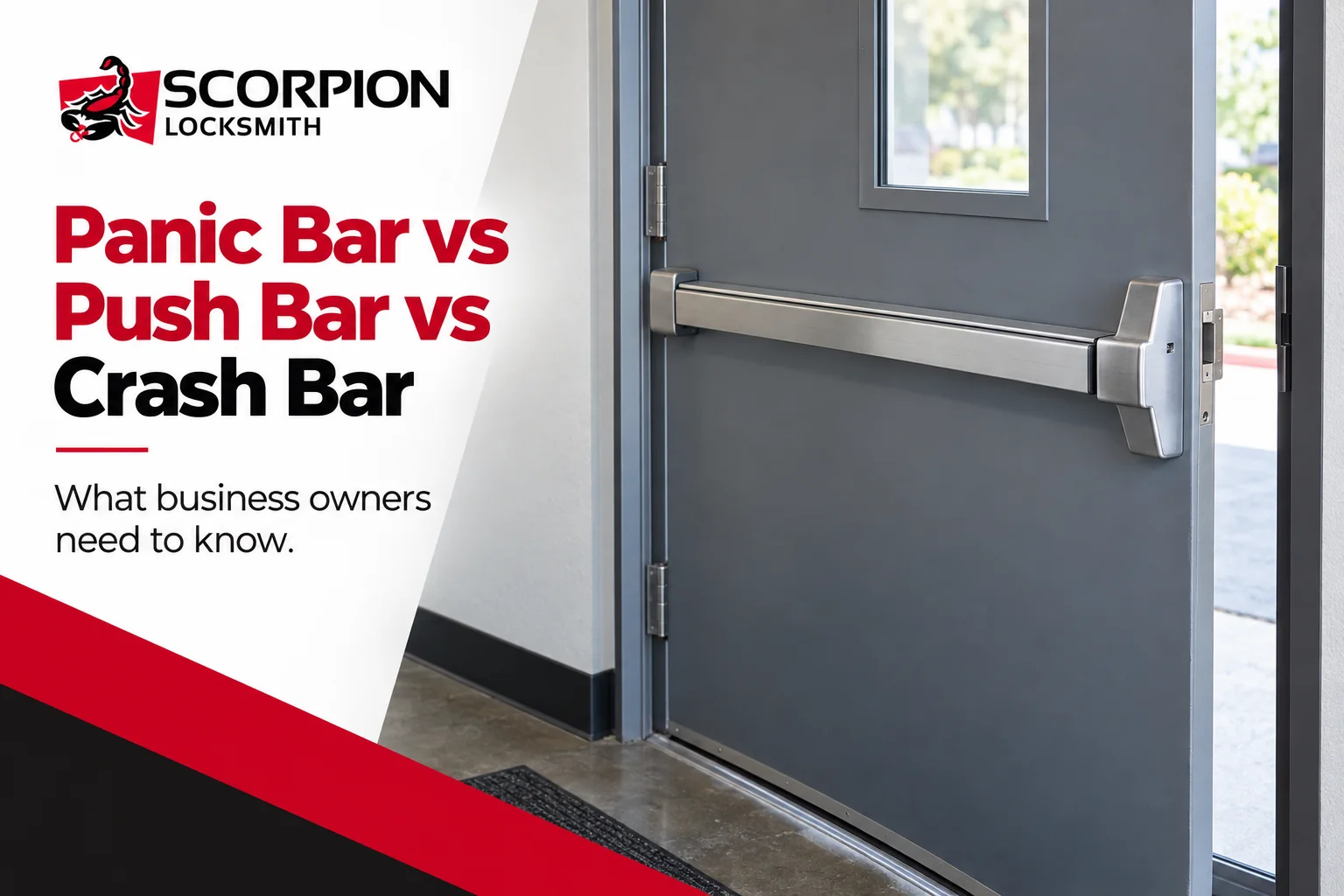
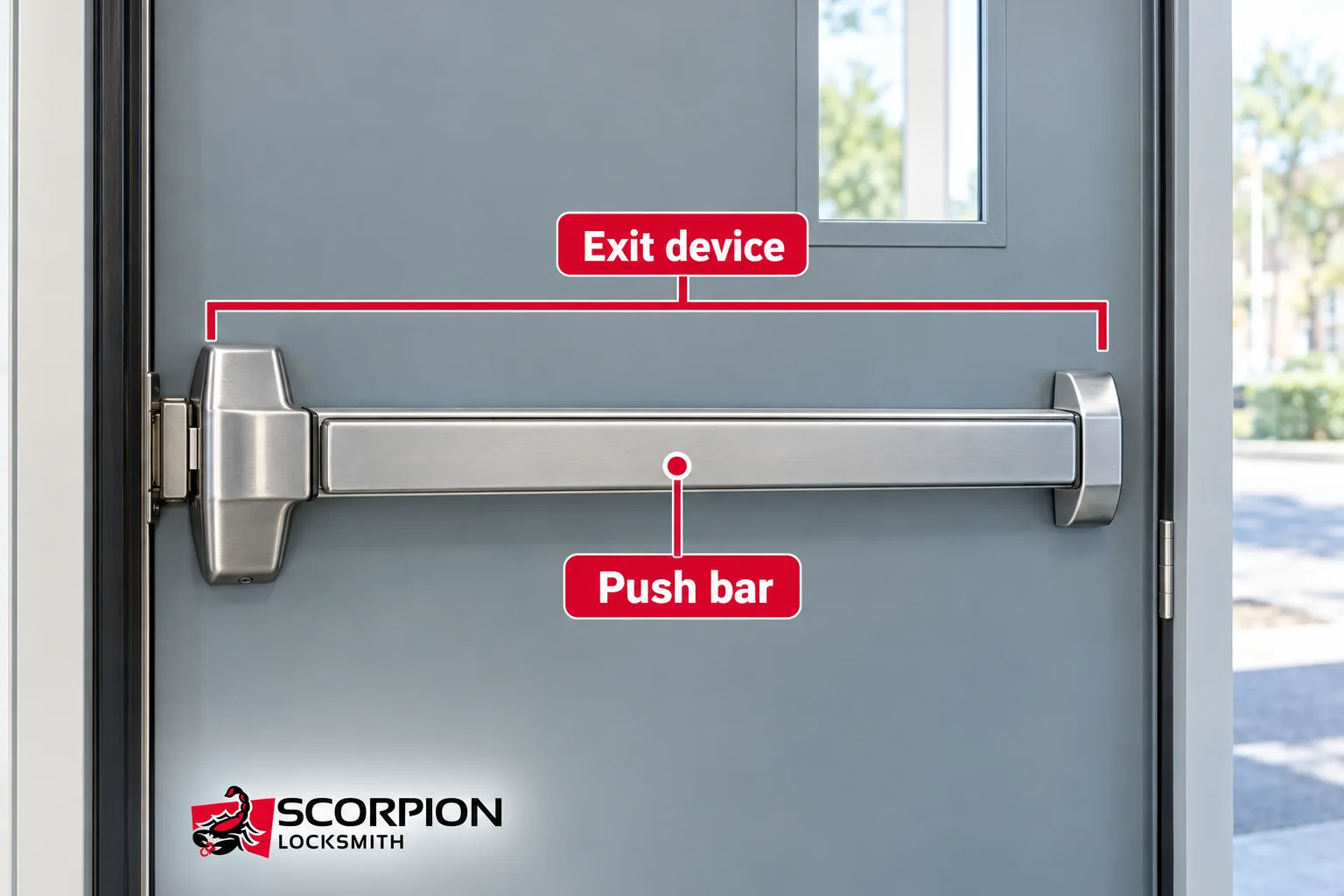
In a panic bar vs push bar comparison, the names often overlap. A panic bar usually means an exit device, while a push bar can mean the part you press. Crash bar is another everyday name, not a reliable product specification. For a service quote, ask about an exit device and describe the door, its use, and any fire rating.
What a panic bar vs push bar comparison leaves out
The important distinction isn't which nickname appears on a quote. It's what the complete device is designed to do and whether it suits the opening. A product described only as a crash bar leaves too much unknown to make a purchase.
Manufacturer Von Duprin explains that an exit device can be panic exit hardware or fire exit hardware. The part you press may be called a push bar, push pad, or crossbar. Those names don't settle the device's rating or fit.
When reviewing a proposal, look beyond a line that says “install push bar.” The proposed model, intended use, and fit for your door matter more than the casual name. A clear description lets you compare actual equipment rather than assume two quotes cover the same work.
A fire-rated opening needs more than a similar-looking bar
Panic exit hardware and fire exit hardware aren't interchangeable labels. If the door or frame is fire-rated, that rating belongs in the hardware selection from the start. Don't choose a replacement by matching the shape or finish of the old bar.
A photo can help identify an existing device, but appearance alone doesn't establish its approved use. Existing labels and model information provide a better starting point. If the rating is unknown, leave it unknown until it's checked rather than treating the opening as unrated.
This distinction matters even when the old hardware has been there for years. Its presence doesn't establish that the same replacement is right for the door's current use.
Houston requirements depend on how the space is used
The Houston Permitting Center's current construction-code sheet lists the 2021 International Building Code and 2021 International Fire Code with Houston amendments. For a new tenant, remodel, or inspection correction, local review can affect the hardware choice.
Under Section 1010.2.9 of the 2021 International Building Code, doors serving Group A assembly or Group E educational rooms or spaces with an occupant load of 50 or more require panic or fire exit hardware when a latch or lock is present. The section also covers certain Group H hazardous-use doors.
Don't apply the number 50 to every business door. Occupancy group describes how a space is used. Occupant load is the number used for code review, not simply the number of employees working that day. A storefront, office, and gathering space don't automatically share the same requirements.
The model code must be read with Houston's amendments and the local authority's requirements. If the property is outside Houston city limits, use that jurisdiction's rules rather than assuming Houston's code applies.
A door that won't release needs attention before an upgrade
If the bar moves but the door won't open normally, describe that as an exit problem rather than starting with a request for a new bar. The hardware and the condition of the opening both need review. That symptom alone doesn't identify the cause.
Describe what happens during normal use, including whether the problem is constant or comes and goes. That gives the service provider useful information without turning a guess into a diagnosis.
What to have ready before a hardware quote
Keep the door information together so the service provider can assess the opening rather than price a nickname. You don't need to identify every part yourself. Useful photos and existing records are a better starting point than a guessed model number.
-
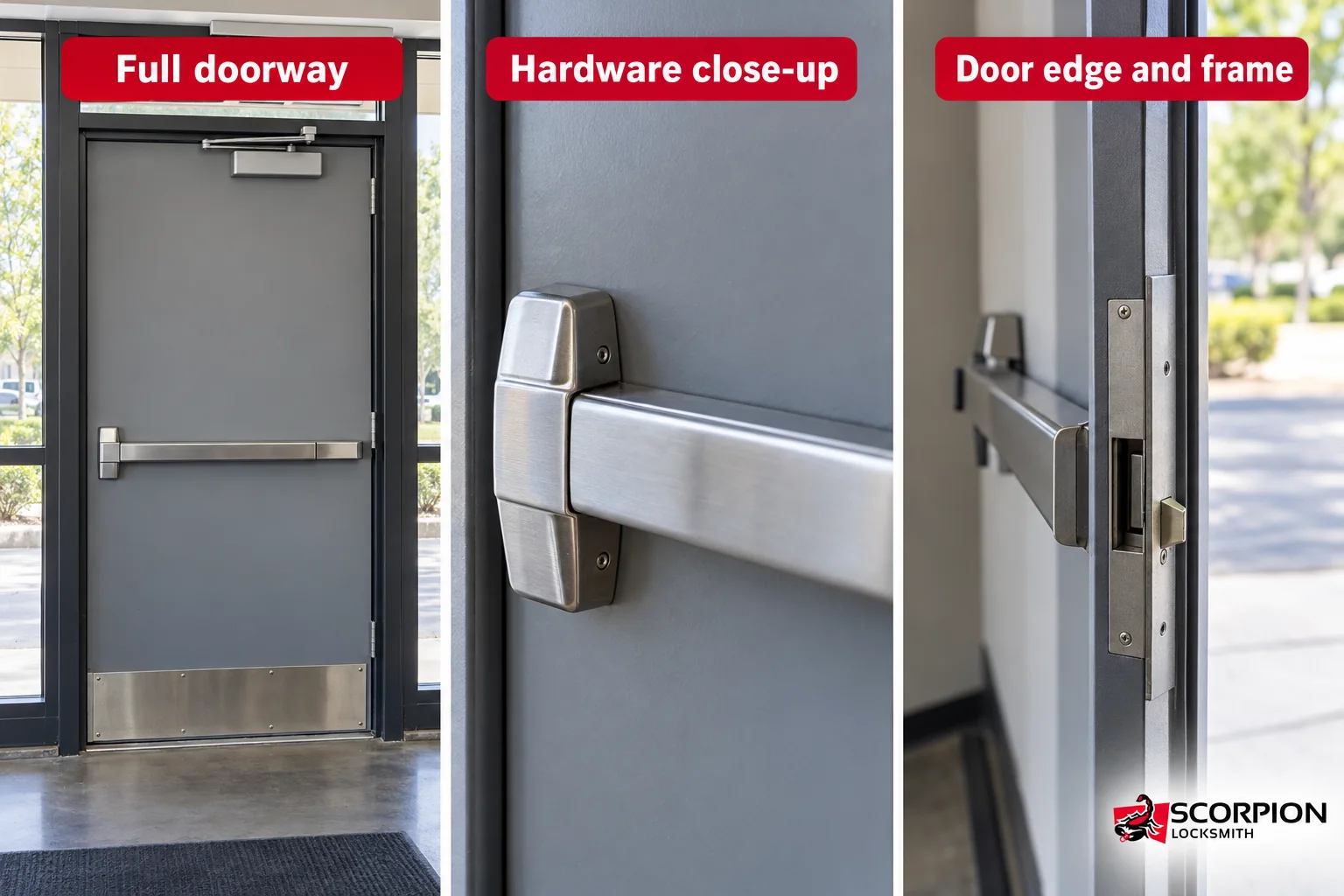
Full doorway. Take a photo from inside that shows the entire door and frame. Include both leaves if it's a double door and show which way the door opens.
-
Hardware close-up. Capture the device, its mounting area, and any readable manufacturer or model label. Keep the image sharp enough to read without removing covers.
-
Door edge and frame. Photograph accessible rating labels. Don't remove or paint over them. Include visible damage or a gap that appears uneven.
-
Door size and material. Share available dimensions and whether the door is glass with a metal frame, solid metal, wood, or another material. On a glass door, the narrow vertical frame edge where hardware mounts is called the stile. Its width matters.
-
Use and review records. Include the space's current use, any planned change, the known occupant load, and written inspector comments. Mark missing information as unknown.
-
Connected systems. Note any existing access control or other wiring tied to the opening. Don't assume a replacement will work with it just because the bar fits.
With those details ready, a panic bar installation assessment can focus on the actual opening. The scope should distinguish repair, replacement, and a new installation. It should also identify any unresolved door, frame, or code question before hardware is purchased.
More questions about business exit hardware
For commercial exit hardware service in Houston, call Scorpion Locksmith at (281) 623-1517. Share the door photos, known hardware details, and any inspection notes to discuss the next step for your opening.