Picture this: you’re resting on your couch after a long day, enjoying the peace and quiet, when a cold breeze sneaks in. You glance over, and there are your beautiful French doors, looking elegant…but maybe not so tough. Are they up for the job if a crook thinks he’s got an easy way in? Whether you already have double doors or you’re thinking about installing French doors at home, you might find yourself wondering just how safe those doors really are.
French doors have a way of sprucing up any house. They let in extra light and turn plain rooms into showstoppers. But if security isn’t your middle name, double doors can act like a weak link in your home’s chain mail. We’re here to put your mind at ease. We’ll smash through the confusion—like a locksmith with a battering ram, but gentler—and walk you through simple ways to lock down your French doors and keep your home safe.
Double Doors – Great Looks, But What About Security?
French and double doors are a magnet for compliments and, sometimes, unwanted attention. These doors, also called patio doors, have wide glass panels and open from the middle. If you live in Houston, you know how important it is to keep everything secure—whether you’re protecting your tools in the garage or making sure your family is safe at night.
Here’s the catch: many old French doors rely on a wimpy latch or cheap lock, almost like locking your front gate with a rubber band. Not good. These setups invite burglars to take their chances, especially when one side, the “passive” door, only stays put with a little bolt that slides into the frame or the floor.
Securing double doors isn’t rocket science. With the right locks and a little know-how, you’ll have a setup safer than your grandma’s secret cookie jar.
Anatomy of a French Door – What Needs Locking?
Before you can pick the right lock, you need to know what you’re dealing with. French doors are like two old friends—one does most of the work (the “active” leaf), while the other likes to just hang around (the “inactive” or “passive” leaf). The active door is the one you open and close every day. The passive one stays put, only moving when you want both doors open wide.
Most folks don’t realize that both sides of the door need locking down. Burglars know all about those weak points. They’ll target the edges where the doors meet, or the glass itself if they think you cut corners on security.
If you picture your French doors like the saloon doors in an old Western, it’s easy to see why double-layered protection beats a single lock.

Best Lock Solutions for French and Double Doors
Let’s roll up our sleeves and get to the good stuff. Your double doors can be safer. It just takes the right lock solution. Here’s what works best to turn your French doors from a soft target into Fort Knox.
-
Multipoint Lock Systems
Have you ever wished for more than just one lock holding the fort? Multipoint locks grant that wish. When you turn the key or throw the handle, multiple bolts slide into action, locking at the top, middle, and bottom of your doors. It’s like a rugby tackle from three big linebackers instead of just one.
These systems are hard to beat, and crooks who see multipoint locks usually move on to an easier target. They work best on newer doors, but a pro can retrofit many older French doors too.
-
High-Quality Deadbolts
Think of a deadbolt as the world’s most reliable wingman. A single-cylinder deadbolt requires a key from the outside and a thumb turn from the inside. Double-cylinder versions need a key on both sides, which helps if you’ve got glass panels near your lock—thieves can’t reach around with a long arm, smash the glass, and unlock the door.
Just remember, with a double-cylinder lock, you need to keep a key nearby (away from the door itself), so you’re not trapped in an emergency.
-
Mortise Locks
A mortise lock slides into a pocket inside the door itself. It’s built tough and hard to pry open. Mortise locks work well on French doors, especially if you want a classic look with muscle underneath.
They come with a latch and a deadbolt rolled into one neat package, perfect for swinging doors. With a mortise lock, your double doors won’t just look good—they’ll put up a fight if someone tries to mess with them.
-
Astragal and Flush Bolts
An astragal is a fancy word for a strip that runs up and down the middle where your double doors meet—kind of like a backbone. Add in flush bolts that secure the top and bottom of the inactive door, and you’ve plugged two major gaps. Burglars without X-ray vision won’t even know those bolts are there.
Flush bolts are easy to operate with a flick, and they keep the passive door rock steady. Make sure they recess deep into the top frame and the floor for the best hold.
-
Strike Plates and Reinforcement
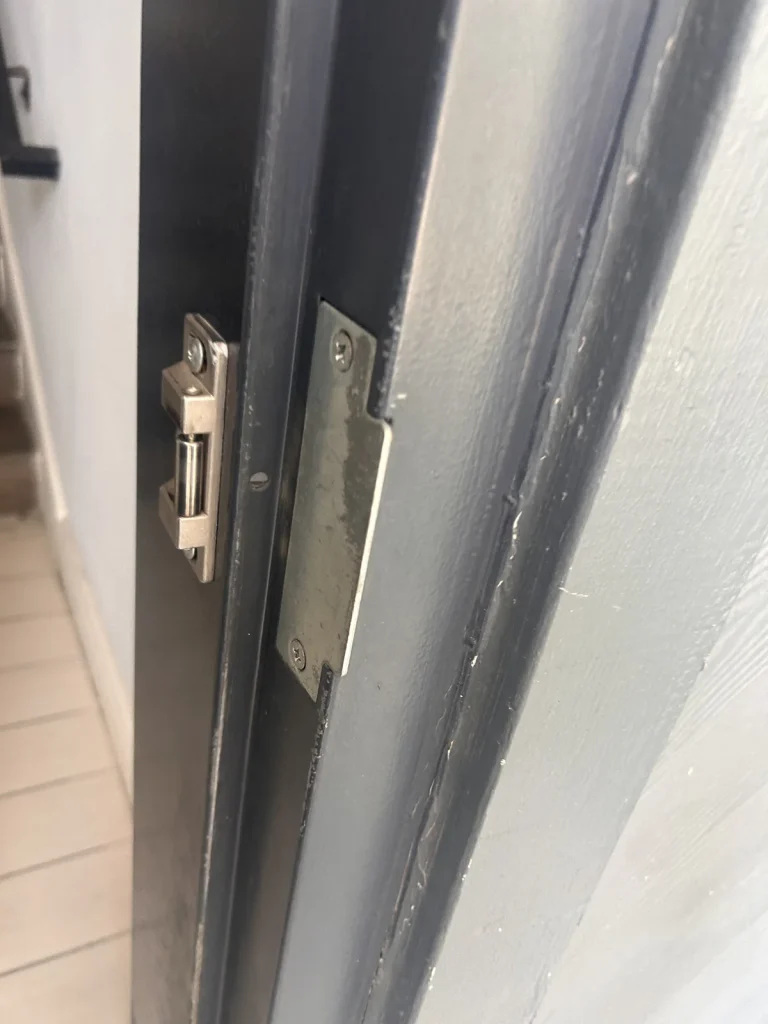
Metal strike plates are the unsung heroes of door security. When the lock bolt slides home, it lands in this metal box. A flimsy strike plate can split if someone kicks the door. Trade up to a heavy-duty strike plate, using long screws (at least three inches) that bite deep into the wall stud. A beefed-up strike plate can mean the difference between a door that buckles and one that stands firm.
-
Glass Security Solutions
French doors are known for their glass, but that glass can be a soft spot. Burglar-resistant glass, window film, or window bars will stop dangerous types in their tracks. Security film holds shattered glass together, so even if someone swings a hammer, they’re more likely to get a headache than a way in.
-
Keyless Entry—Digital Locks
If you like gadgets as much as safety, smart locks are the cherry on top. Keyless locks let you set custom codes, so no more hiding a spare key under the flowerpot. Digital deadbolts with Wi-Fi or Bluetooth give you an alert if someone messes with the door. They also make it easy to lock up with a tap on your phone.
Digital locks can be placed on French doors, but make sure both leaves are secure first—you wouldn’t put a high-tech vault on a tent, right?
Handy Tips – Don’t Just Lock, Check and Reinforce
- Check the hinges: Door hinges should have non-removable pins or be installed on the inside, so no one can pop them out.
- Mind the gaps: Make sure there’s not a big gap between the doors. Weatherstripping not only saves energy, it closes spaces thieves could pry open.
- Keep landscaping clean: Crooks like to hide. Keep bushes and trees cut back so your doors are in full view from the street or your neighbor’s house.
Put a Lock on Worry—Why Call Scorpion Locksmith?
Let’s face it, securing doors isn’t always a Saturday DIY project. If you want your French doors to stand up to Houston’s toughest troublemakers, Scorpion Locksmith has your back. We’re the folks you call when you want expert advice and fast, professional lock installation.
Our team can install all the lock types listed above, replace damaged doors, and add reinforcements that blend right in. We know every house is different, and we’ll help you choose the setup that makes the most sense for your family’s safety.
Think of us as your security pit crew. We’ll make sure your double doors aren’t the weak link. Don’t leave your home’s safety to chance or a rickety old lock—call Scorpion Locksmith today at (281) 623-1517 or visit https://scorpionlocksmithhouston.com/. We keep Houston’s homes safer, one door at a time.