If you plan to change locks or door hardware on a business door, check fire code and egress rules first. A door must let people get out fast, with little effort, and without getting trapped. That sounds simple, but one small hardware swap can cause a big problem. A deadbolt in the wrong spot, a tight closer, or the wrong latch can turn an exit into a headache when seconds matter.

Why fire code and egress rules matter
Business doors do more than open and close. They help people leave the building fast during a fire, power outage, or other emergency. If the door sticks, needs a key to exit, or takes too many steps to open, people can lose time. And in an emergency, time runs like a startled deer.
Fire code rules focus on safe exit paths. Egress rules cover how people move from inside the building to a safe place outside. The door, frame, lock, closer, and exit hardware all play a part. You can learn more about egress from Wikipedia.
Many owners think, “It is just a lock change.” That is where trouble sneaks in. A lock that works fine on an office door may be a bad fit for a rear exit door. A panic bar may be required on one opening but not on another. A fire-rated opening has its own rules too. For help with business hardware, Commercial locksmith service from Scorpion Locksmith can help review the opening before changes are made.
The first thing to know before changing hardware
Start with this question, what kind of door is it?
That sounds almost too easy. Still, it is the key that opens the whole puzzle. A business may have front entry doors, office doors, rear exit doors, stockroom doors, stairwell doors, and fire-rated doors. Each one may have a different job.
Ask these basic questions first:
- Is this door part of the exit path
- Is the door fire-rated
- Does the door already have a panic bar
- Does the door lock from the inside with a key or thumbturn
- Does the door serve the public, staff only, or both
- Is this a single door or a pair of doors
- Does the door have an access control system
If you skip these questions, you may trade a small repair for a code issue. Openings with Commercial access control systems or Commercial keyless entry systems need extra care when exit rules apply.
Egress basics in plain English
A safe exit door should be easy to use from the inside. In many cases, people should be able to open it with one motion. No scavenger hunt. No secret handshake. No digging in pockets for a key.
That is why panic hardware is common on many business exit doors. You push the bar, the latch releases, and the door opens. Simple wins. For related exit device work, Exit device installation, Panic bar installation, and Push bars are common service areas.
Here are a few common ideas tied to egress door hardware:
| Part | What it does | Common issue |
|---|---|---|
| Panic bar | Lets people exit by pushing | Replaced with wrong lock |
| Door closer | Helps door shut after opening | Too strong, door is hard to open |
| Latch | Keeps door closed and secure | Misaligned, door will not latch |
| Fire-rated hardware | Helps opening resist fire spread | Swapped for non-rated part |
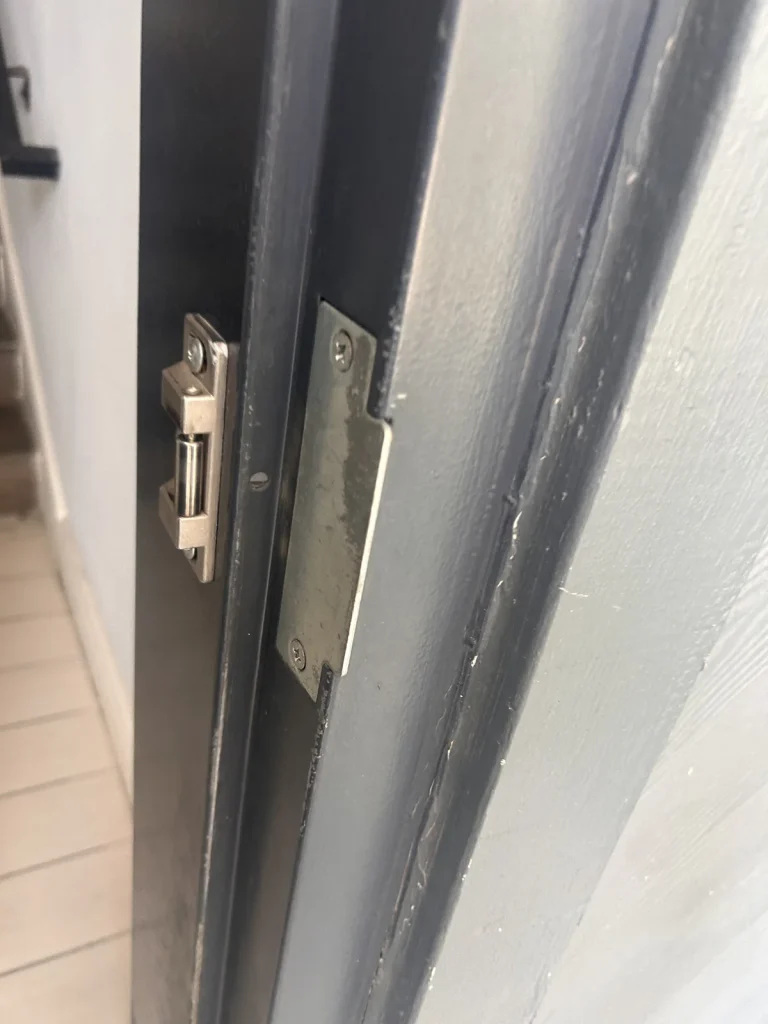
| Electric strike or maglock | Works with access control | Exit method is not clear or fast |
If a person cannot get out fast and safely, the hardware needs another look. For code references, see the OSHA exit routes page.
Hardware changes that often cause trouble
Some changes look small on the surface. They are not.
Adding a deadbolt to an exit door
This is a common mistake. Owners want extra security and ask for another lock. Extra security sounds smart, but on an exit door, a second lock can create extra steps to get out. That can clash with egress rules. A Commercial lock installation should match the job of the door.
Swapping a panic bar for a lever lock
A lever lock may look cleaner. It may even cost less at first. Still, if that opening needs panic hardware, switching it out can create a serious issue. That is where Panic bar installation or Crash bar installation may matter more than looks.
Using the wrong closer
A door closer that is too strong can make the door tough to open. That is a problem for daily use and can also affect safe exit. Houston heat and humidity can make doors swell or shift a bit, which makes a too-tight setup even worse. Sometimes a full Commercial lock repair visit helps spot related wear.
Changing a fire-rated lock or latch
Fire-rated doors and frames need parts that match the opening. You cannot treat them like a blank canvas. A mismatched latch, closer, or hinge can affect how that opening performs.
Locking up a back door for security
This one shows up a lot. A rear door near a loading area gets extra hardware because of theft worries. Security matters, no question. But if that door is part of the exit path, it still has to allow safe escape.
What we usually see in Houston, TX
In Houston, many businesses near Westheimer Road, warehouse spaces, strip centers, and small office buildings have back doors that get rough use. Heat, rain, and humidity wear parts down faster than people expect.
We also often see:
- Panic bars with loose trim or worn latches
- Metal doors that no longer line up right
- Closers leaking oil or slamming shut
- Rust starting near the bottom of exterior doors
- Added locks that make exiting harder
A door may pass the eye test and still have problems when you push it in real life. For broader business door support, Locksmith for buildings and Commercial lock replacement services are often relevant.
Fire-rated doors need extra care
A fire-rated door is part of a fire barrier. Its job is to slow fire and smoke. That only works if the full opening stays in proper shape.
A few things matter here:
- The door should latch when it closes
- The closer should pull the door shut fully
- The correct hardware should stay on the opening
- Holes, damage, or field changes can create trouble
- Wedges and props should not hold the door open unless the system is built for that use
A propped-open fire door is like an umbrella with holes in a rainstorm. It looks helpful until the weather turns.
Panic bar basics
Panic bars are common for good reason. You press, the latch releases, and you go out. Fast exit matters most when people are stressed, tired, or moving in a crowd.
A few plain truths about panic bars:
- They should work with one push
- They should not stick or drag
- The door should not need a key to open from inside
- The latch should line up cleanly with the strike
- Added chains, slide bolts, or after-hours tricks can create risk
If your staff says, “You have to hit it just right,” that is a red flag. Doors should not need sweet talk. Related help may include Push bars and Exit device installation.
Access control and maglocks, where owners get tripped up
Electric locks can help with security and traffic flow. They can also create problems if the exit side is not set up right.
A maglock or electric lock should still let people exit fast. If the system loses power, what happens. If the sensor fails, what happens. If a person has never used the door before, can they still get out.
That is why hardware changes on access-controlled doors need extra care. It is not only about keeping people out. It is about letting people out when it counts. Businesses using Commercial access control systems or Intercom systems should review exit function closely.
Quick checks before you approve any hardware change
Use this short list before work starts:
- Ask what job the door serves
- Check if the opening is fire-rated
- Test exit from the inside
- Count how many actions it takes to open
- Look for panic hardware or signs it was removed
- Check if the closer makes the door hard to open
- Look at the latch and strike alignment
- Confirm the hardware fits the door and frame
- Check how rain, rust, and humidity have affected the opening
- Make sure access control still allows quick exit
These steps are simple, but they catch many problems early. If questions come up, Contact Us at Scorpion Locksmith.
If this happens, try this
- If the door needs a key to exit, check if that lock belongs on an egress door
- If the panic bar sticks, inspect the latch, strike, and door alignment
- If the door slams, check the closer for wear or bad adjustment
- If the door will not latch, look for sagging hinges or frame shift
- If the door drags in humid weather, inspect for swelling, rust, or alignment problems
- If a fire door stays open, check the closer and latch first
- If a rear exit has extra slide bolts or chains, review whether they block safe exit
- If an access-controlled door confuses staff, test the exit function with fresh eyes
A few common myths, and the real story
Myth: Any lock is fine if it keeps the building secure.
Fact: Security matters, but exit doors still need safe egress.
Myth: A back door used by staff does not matter much.
Fact: Staff doors can still be part of the exit path.
Myth: If the door opens, it is fine.
Fact: It should open easily, latch right, and work fast under stress.
Myth: Fire-rated doors are just heavier doors.
Fact: They need matching parts and proper closing action to do their job.
Weather matters more than many owners think
Houston weather can be hard on business doors. Heat can affect closers and seals. Humidity can make wood parts swell and metal parts corrode. Rain can creep into thresholds and lower door edges. Then the door drags, sticks, or stops latching right.
Cold snaps happen too, even if they do not stay long. A sudden drop in temperature can change how seals and hardware feel. A door that worked fine last week may act stubborn after a weather swing.
That is why regular checks matter. Small shifts become big problems if no one catches them.
A simple care plan
A little routine care keeps surprises away.
Weekly
- Open each exit door from inside
- Make sure it opens with little effort
- Check that the latch catches when the door closes
- Listen for scraping, sticking, or slamming
Monthly
- Inspect panic bars and trim for looseness
- Check door closers for leaks or weak action
- Look for rust, worn screws, and damaged strikes
- Test access-controlled doors for quick exit
Yearly
- Review all exit doors after any remodel or hardware change
- Inspect fire-rated openings with extra care
- Replace worn parts before they fail
- Check weather damage around exterior doors
This kind of plan is not fancy. It just works.
A short story from real life
A business owner once said, “We only changed one lock, what could go wrong?”
The answer was, quite a bit. The new lock added another step to open the rear exit from inside. Staff had gotten used to it. They did not like it, but they worked around it. That is the problem with slow-building issues. People adapt to bad setups like a frog in warm water.
A quick review of the door found more than the extra lock. The closer was too strong, the latch was dragging, and the threshold had rust. None of those problems looked dramatic alone. Together, they made the door harder to use than it should have been.
That is why hardware changes should never happen in a vacuum.
What building owners and managers should ask before signing off
Before you approve a lock change or door hardware update, ask:
- Will this make exit harder from the inside
- Is this opening part of a fire-rated assembly
- Does this door need panic hardware
- Will the new part fit the existing prep and frame
- Has the door been tested after install
- Will Houston weather wear this setup down fast
Those questions save time, money, and stress.
FAQs
What is egress for a business door?
Egress means the path people use to leave a building safely. The door must open in a way that lets people get out fast.
Can I add an extra deadbolt to my business exit door?
Maybe not. If the door is part of the exit path, an extra deadbolt can create an unsafe setup. The door should allow quick exit from inside.
Do all business doors need panic bars?
No. It depends on the door use, occupant load, and building rules. Many exit doors do use panic hardware for safe, simple exit.
What is a fire-rated door?
It is a door and frame assembly made to help slow fire and smoke. It needs the right hardware and should close and latch as it should.
Why is my commercial door harder to open in summer?
Heat and humidity can affect alignment, seals, closers, and rust. In Houston, weather can make small door issues show up fast.
Can I change hardware on a fire door myself?
A small change can create a larger issue if the part is wrong for the opening. Fire-rated doors need extra care with hardware choice and install.
How often should business exit doors be checked?
A quick weekly test is smart. A closer look each month helps catch wear, rust, and misalignment before they grow.
What if my rear exit door is only for employees?
It still matters. A staff door may be part of the exit path and should allow safe, easy escape.
If you run a business in Houston and want help with locks, panic bars, closers, exit devices, or commercial door hardware, Scorpion Locksmith can help you spot problems before they turn into bigger ones. Our service can help your doors stay secure, work smoothly, and support safe exit for staff and visitors. Call Scorpion Locksmith at (281) 623-1517 or visit https://scorpionlocksmithhouston.com/. You can also Contact Us for service.