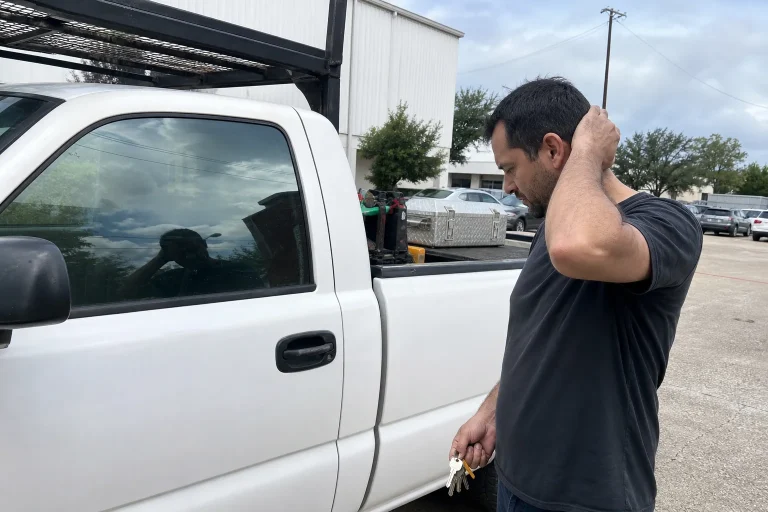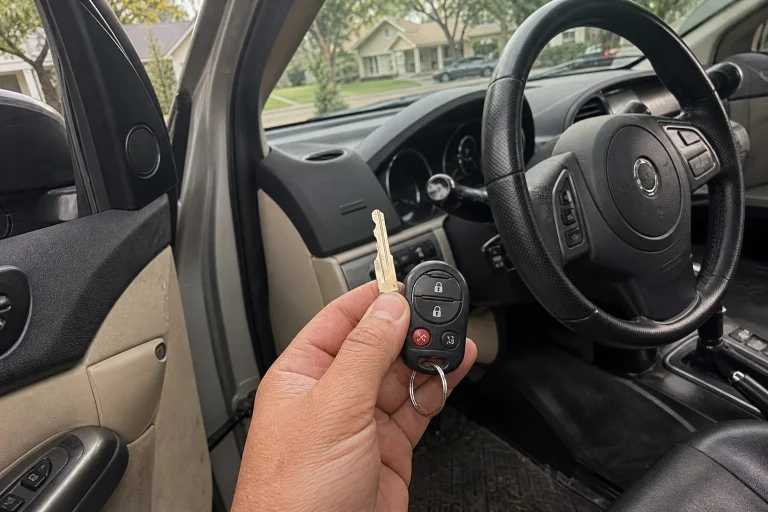
If you are not sure whether you have a remote key, a transponder key, or a basic key, you can usually tell with two quick checks. Look at the head of the key, then try starting the car with the remote battery removed. If the car still starts, you may have a basic key. If it cranks but will not start, you likely have a transponder chip. If you lock and unlock with buttons, you have a remote piece involved, either separate or built in.
Why this matters, and how it saves you time
Picture this. You are in a parking lot off Westheimer, holding a key that looks normal, yet the car acts like it has trust issues. It turns, it cranks, it refuses to run. You say, “Come on, buddy.” The car says, “Prove it’s you.”
That is the whole point of knowing your key type. Each type needs a different service.
- A basic key is mostly cutting and matching the grooves.
- A transponder key needs cutting plus chip programming.
- A remote or fob may need battery help, syncing, or programming, and sometimes a blade cut too.
When you know what you have, you can ask for the right help the first time. No extra trips. No head scratching. Less time standing in Houston heat, baking like a potato on a dashboard.
If you need help with Car key replacement, Transponder and Key FOB programming, or a fast Emergency locksmith, Scorpion Locksmith can help in Houston, TX.
The three main key types, in plain talk
Basic key, the plain metal classic
This is the simple one. No chip, no buttons, no fancy stuff. It is just metal cuts that match the lock.
How it acts:
- It turns in the door and ignition.
- If it fits and turns, it usually starts the car.
Common places you will see it:
- Older cars and some work trucks.
- Older model fleet vehicles.
Transponder key, the “chip inside” key
This key may look like a basic key, but it has a small chip in the plastic head. The car checks for that chip. If the chip is missing or not matched, the car may crank but not start.
How it acts:
- It may unlock the door like a normal key.
- It may crank, then stall, or never fire up.
- A security light may flash on the dash.
What the car is doing: Think of it like a secret handshake. If the handshake is wrong, the car says, “Nice try.”
If you suspect a chip issue, Transponder and Key FOB programming and Car key replacement are common next steps.
Remote key or key fob, the button boss
This is what most people call a “remote.” It locks and unlocks doors with buttons. Some remotes are separate from the key. Some are built into the head of the key. Some are a smart key that never needs to go into the ignition.
How it acts:
- Buttons lock and unlock.
- Some also start the car with push button start.
- Some have a hidden emergency key inside.
Important note: A remote is not the same thing as a transponder, but many modern keys have both. That is why people get mixed up.
For button and fob-related issues, Keyless entry systems and Transponder and Key FOB programming may apply depending on what you have.
Fast visual checks, what to look for in your hand
You do not need lab gear. You just need your eyes and a few clues.
Check 1, does it have buttons?
- Yes, buttons on the key head or a fob. You have a remote involved.
- No buttons. You may have a basic key or a transponder key.
Check 2, plastic head size
- Thin metal key with a tiny head, often basic.
- Bigger plastic head, often transponder, but not always.
Check 3, is there a “laser cut” blade
Look at the blade.
- Old style keys have edge cuts, like mountain peaks on the sides.
- Many newer keys have a center track cut down the middle.
A center track blade often goes with transponder systems. Not always, but often.
Check 4, does it say “chip” on the key tag
If you have a spare from a dealer or a shop, the tag might say “chip” or “transponder.” Tags get lost, but if you still have it, it helps.
Check 5, do you have a flip key
A flip key is the one that folds in like a pocket knife.
- Most flip keys have a remote built in.
- Many flip keys also have a transponder chip.
Simple tests you can do at home without special tools
These tests are meant to help you describe the problem. Do them safely, parked, and not blocking traffic.
Test A, the “remote battery out” test
If your remote is built into the key head, you can do a clue test. Remove the remote battery from the key or fob if you can.
Then try to start the car.
What it can tell you:
- If the car starts with the remote battery removed, the chip side may still be working, or you may have a plain key.
- If the car will not start but the key turns, you likely need transponder programming help, or the chip is not being read.
Note: Some cars still start even if the remote part is dead. That is normal.
Test B, the spare key comparison
If you have a spare, compare behavior.
- If spare starts the car and your main key does not, your key may be damaged, worn, or the chip has failed.
- If both keys crank but do not start, it may be a car issue, not a key issue.
Test C, watch the security light
Many vehicles show a key or lock symbol.
Try to start the car and watch the dash:
- Flashing security light, often points to a key recognition issue.
- No security light change, could be something else.
Keep it simple. You are only gathering clues.
Test D, door lock test
Try the physical door lock with the metal blade.
- If it turns smoothly, blade may be fine.
- If it jams or feels wrong, the blade may be worn, or the lock may need help.
A worn blade can still turn the ignition sometimes, but struggle at the door.
Quick “If X, then Y” troubleshooting steps
- If your key has no buttons and the car starts normally, then you likely have a basic key.
- If your key has no buttons and the car cranks but will not start, then you likely have a transponder key issue.
- If your key has buttons and the buttons do not work but the car starts, then the remote battery or remote syncing may be the issue.
- If your key has buttons and neither the buttons work nor the car starts, then you may have both a remote problem and a transponder programming issue.
- If your key is a push button start smart key and the car says “key not detected,” then the fob battery, fob, or car antenna system may be involved.
- If the key works sometimes and fails sometimes, then heat, moisture, or a weak battery may be making a small problem act big.
- If the blade is bent or badly worn, then stop forcing it and get help, forcing it can break the key in the lock.
For help on the road, Emergency locksmith and Car lockout service can be useful depending on what is happening.
A quick compare table, so you can name what you have
| What you see | What it is often called | What it usually needs when lost or broken |
|---|---|---|
| Metal key, no buttons, small head | Basic key | Key cutting, lock check |
| Metal key with larger plastic head, no buttons | Transponder key | Key cutting plus programming |
| Separate fob plus a metal key | Remote plus key | Battery help, syncing, sometimes programming |
| Key with buttons built into the head | Remote head key | Battery help, key cutting, often programming |
| Push button start fob, may have hidden key inside | Smart key | Fob battery, programming, sometimes emergency key cutting |
Common mix-ups that trip people up
“My key has buttons, so it can’t have a chip.”
Fact: Many keys have both. The car start part can be chip based, while the lock and unlock part is the remote.
“If it turns in the ignition, it should start.”
Fact: A transponder key can turn and still fail the chip check. The engine may crank and still not run.
“If the remote stopped working, the car won’t start.”
Fact: Some cars start even with a dead remote battery, as long as the transponder part is read. Some push button cars have a backup spot to hold the fob.
“I can just buy any key online and it will work.”
Fact: Many keys must match the car system and then be programmed. The wrong key type can waste time.
More background on how immobilizer-style systems work is available on Wikipedia.
What we usually see in Houston, TX
Houston drivers deal with a little bit of everything. Long commutes, parking garages, job sites, and a lot of weather swings.
Here are patterns we often run into:
- Remote batteries that die faster from heat, keys left in hot consoles, or sitting in direct sun.
- Buttons that stop clicking after weeks of pocket lint and grit.
- Keys that work fine until a big rain, then act up from moisture getting into a cracked fob shell.
- Worn metal blades from daily use, common for work trucks and older sedans.
If you park in a garage downtown or in big lots near the Galleria area, you also tend to drop keys more. Concrete is not gentle.
Houston weather, and why your key acts weird in it
Houston heat and humidity can be rough on small electronics.
Heat
Heat can:
- Drain coin cell batteries faster.
- Warp cheap fob shells so the buttons stick.
- Make worn plastic softer, so it cracks.
Tip: Do not store your fob on the dash. That is like putting it in a tiny oven.
Humidity and rain
Humidity can:
- Let moisture sneak into a cracked remote shell.
- Cause corrosion on battery contacts.
Tip: If your fob got wet, remove the battery when you can and let it dry out. Do not microwave it. Yes, people try that.
Cold snaps
Houston does not get long winters, but cold snaps happen. Cold can:
- Make weak batteries show their true colors.
- Make buttons feel stiff.
Tip: If your remote works again once it warms up, the battery may be on its last legs.
For extreme heat safety information, you can also review guidance from the National Weather Service.
When the problem is not the key
Sometimes the key gets blamed for everything, like the last kid near the cookie jar.
A few other causes:
- A weak car battery can make the car act like it does not “see” the key.
- A worn ignition cylinder can fight the blade.
- Door lock wafers can stick from dirt or lack of lube.
- Push button systems can have antenna or sensor issues.
A key check is still a smart first step, because it is fast and simple.
If your issue appears tied to the ignition hardware, Ignition repair and replacement may be relevant.
Safety notes, short and plain
- Do not force a key that feels stuck. A broken key in a lock is a bigger mess.
- Do not keep trying to start the car over and over, it can drain the battery.
- If you are stuck in a sketchy spot, go somewhere safer if the car can move, or call help from inside the car.
A simple care schedule that keeps keys working
Weekly
- Wipe the key and fob with a dry cloth.
- Check that buttons click cleanly and do not stick.
Monthly
- Look for cracks in the fob shell.
- Make sure the key ring is not so heavy it yanks on the ignition, big keychains can wear things out.
Yearly
- Replace the remote battery if you notice shorter range or slow response.
- Get a spare key made while you still have a working key, it is easier than starting from zero.
If you need a spare made, Car key duplication can be easier to handle while your current key is still working.
How to describe your key to a locksmith over the phone
If you call a locksmith, you can save time by saying a few clear details.
Tell them:
- Year, make, and model of the vehicle.
- Does it have buttons, and are they on the key or on a separate fob.
- Does the car crank but not start, or does it not crank at all.
- Any dash message, like “key not detected.”
- Whether you have any working spare keys.
That short list helps the locksmith show up ready. If you want to reach Scorpion Locksmith, use Contact Us.
FAQs
How can I tell if my car key has a transponder chip?
If the key turns and the car cranks but will not start, and a security light flashes, that often points to a transponder chip system. Many keys also have a larger plastic head.
Can a key be both a remote and a transponder?
Yes. Many modern keys have remote buttons for locks and a chip for starting. That is why the words get mixed up.
My key fob unlocks the doors but the car will not start, why?
The remote and the chip are two different parts. The unlock buttons can work while the chip is not being read, or the key is not programmed to the car.
My car says “key not detected,” what should I try first?
Try a fresh fob battery if you can. If it is push button start, look in the manual for the backup start method, many cars have a spot to hold the fob close to the start button.
Can heat in Houston really mess up a key fob?
Yes. Heat can shorten battery life and damage fob shells over time. Keeping the fob out of direct sun helps.
Is it safe to change my key fob battery myself?
Usually yes if you do it gently and use the correct battery type. Be careful not to damage the battery contacts or lose small parts.
If I only have one key left, should I make a spare now?
Yes. A spare made while you still have a working key can save time later, especially if your key type needs programming.
What if my key turns but gets stuck in the ignition?
Stop forcing it. The key blade, ignition cylinder, or steering wheel lock may be binding. Gentle steps help, but if it feels risky, get a locksmith to avoid a broken key.
Need help figuring out your key type or getting the right key working again in Houston, TX? Scorpion Locksmith can help with car key cutting, transponder key programming, remote and fob help, and lock issues, so you get back on the road without guesswork. Call (281) 623-1517 or visit https://scorpionlocksmithhouston.com/.